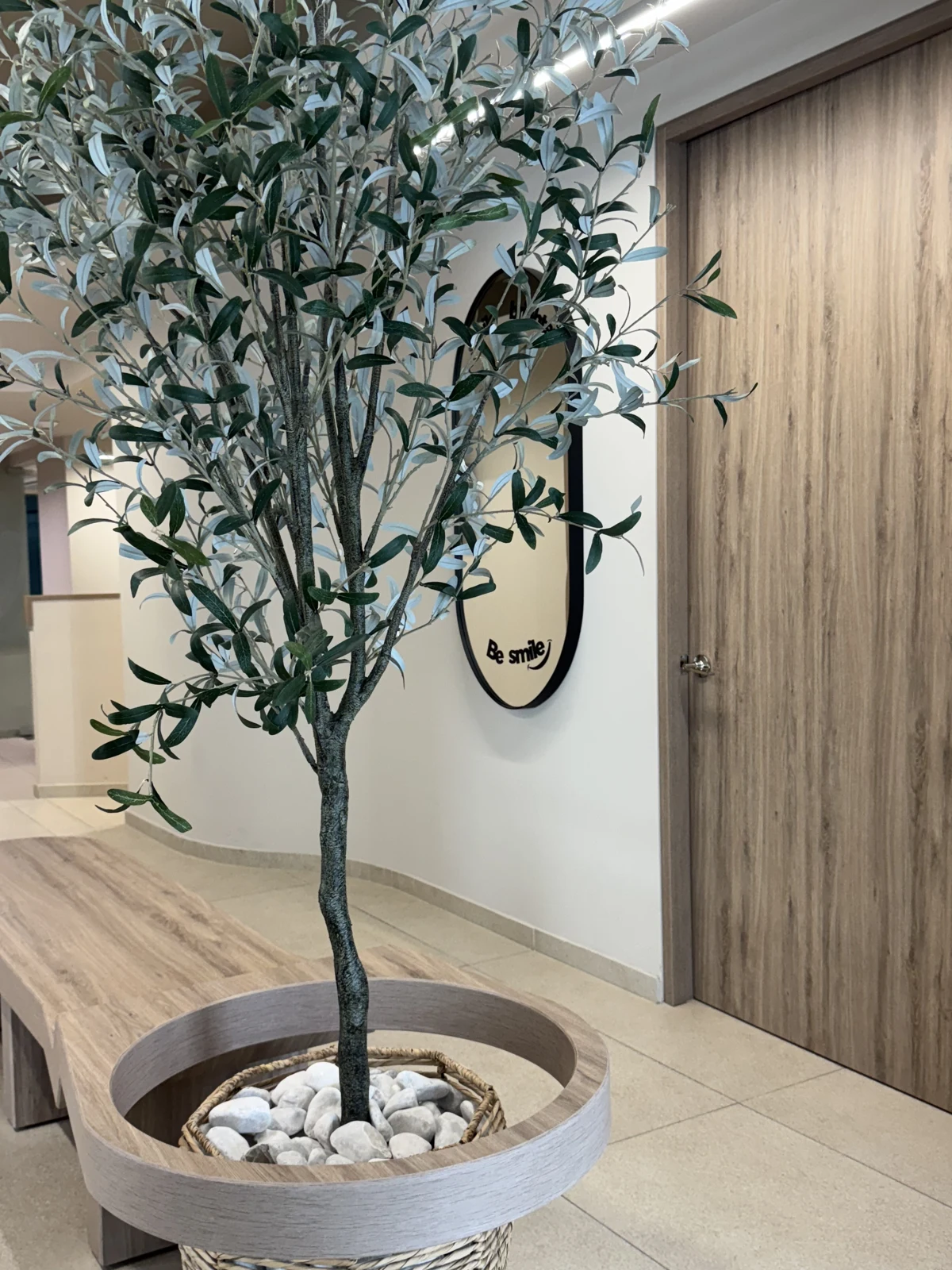
Photo provided by BE SMILE. It illustrates the clinic, not a treatment outcome.
At a glance
An editorial BE SMILE guide to understanding how dental implant candidacy is assessed in Santa Fe, Mexico City. Your plan is based on an in-person examination and individual needs.
Dental implant candidacy is assessed, not guessed
If you are missing a tooth and wondering whether you can get a dental implant, the short answer is that you need an individual assessment. Age alone does not decide the treatment. Your overall health, smoking, the condition of your teeth and gums, and the bone available where the implant may go all need to be reviewed.
A dental implant is placed in the bone to support a restoration, such as a crown, bridge, or denture depending on the case. That is why the question is not only “Do I have enough bone?” It is also whether your mouth is stable and whether the treatment can fit into your daily routine over time.
At BE SMILE, dental implants are planned by considering bone, gums, and rehabilitation needs. A consultation helps put those pieces in order and compare options calmly; it cannot determine your case before examining you.
Book an assessment in Santa Fe to discuss your tooth-replacement options.
An assessment usually begins with your medical history and an oral examination. The goal is to understand what is missing, which teeth remain, how your gums are doing, and which conditions could change the plan. X-rays may then be indicated and, when needed for safe planning, three-dimensional imaging.
These images can help measure bone and locate relevant structures, including nearby tooth roots, nerves, or the maxillary sinuses. Not everyone needs the same tests; the right study depends on the area being treated and the complexity of the case. This is why an implant plan should not be based on a photo or a general impression of your smile. Leeds Teaching Hospitals NHS Trust explains that examination, X-rays, and three-dimensional imaging may all be part of implant planning.
The question changes with the space
Replacing one back tooth is not assessed in exactly the same way as planning for several missing teeth. The conversation can also change if the tooth was lost recently, nearby teeth need treatment, or the restoration needs to distribute biting forces differently. An examination makes room for those differences without promising one identical solution for everyone.
Medical history and relevant habits.
Review of teeth, bite, gums, and supporting tissues.
Imaging studies when the diagnosis calls for them.
A rehabilitation plan and alternatives that fit the case.
Gums, cavities, and active infection come first
An implant does not replace care for the mouth around it. Before placement, cavities, active infection, and gum disease need to be identified and addressed as the plan requires. The assessment also considers whether daily oral hygiene and long-term follow-up are realistic for you.
This does not mean that a history of inflamed gums automatically rules someone out. It means the issue needs to be understood and managed before moving forward. Think of it as preparing the support before placing something that will depend on it for years: an implant does not function separately from the bone and tissues around it.
Cambridge University Hospitals NHS notes that controlling periodontal disease, cavities, and infection, along with appropriate hygiene, is part of preparation and maintenance. If an active issue appears during your assessment, it is worth discussing what needs attention first and how that affects the timeline.
Your routine matters too
The plan needs to work with your ability to brush, clean around the restoration, and attend reviews. This is not a judgment; it is part of protecting the time and treatment involved. If your schedule or daily routine makes any part difficult, mention it at the first appointment so the conversation can stay practical.
If you have bleeding gums, pain, or a tooth with an active infection, request an assessment before deciding on a replacement.
Not necessarily. Bone quantity and shape are studied because they help determine whether there is space and support for an implant. Limited bone does not automatically rule out treatment, but it may require grafting or another approach. That can increase complexity and extend the process, and the indication depends on your anatomy and overall plan. The Leeds guide also describes this possibility.
General health matters for the same reason: it can affect risks, preparation, and follow-up. Poorly controlled diabetes, smoking, a history of periodontal disease, radiotherapy involving the jaws, and some medicines that affect bone are factors that should be reviewed. They are risk factors, not an automatic statement that you cannot be a candidate.
Observational evidence has also linked periodontitis, smoking, and diabetes with a higher risk of disease around implants. A systematic review and meta-analysis indexed in PubMed identifies them as risk indicators; that does not prove one factor will cause a problem for every person. Bring an up-to-date list of diagnoses, medicines, and relevant history to your appointment so the plan is based on complete information.
The plan includes surgery, healing, and follow-up
An assessment does not end once an implant seems possible. It should also explain the stages involved, when the restoration may be placed, and what follow-up will be needed. Implant treatment includes surgery and a period for the implant to integrate with the bone. This can take months and may take longer if grafting or other treatment is needed first.
It helps to ask early how the process may affect your review visits, eating, and day-to-day planning. MouthHealthy from the American Dental Association explains that integration can take months and that ongoing care is part of implant treatment.
Other solutions should be part of the conversation
An implant may be an option, but it is not always the only one. Depending on the space, nearby teeth, bone, priorities, and diagnosis, the discussion may include a bridge, a removable denture, or, in selected situations, leaving the space unrestored. The more helpful question is not “What is the newest solution?” but “Which option best fits my mouth and daily life?”
Your oral and general health are reviewed.
The studies your case needs are requested.
Active problems are addressed when present.
An implant plan is compared with relevant alternatives.
Stages, care, and review visits are defined.
Explore <a href="/implantes-dentales">dental implants at BE SMILE</a> and request a personalized assessment.
Being a candidate also means understanding maintenance
A clear conversation about candidacy includes limits and risks. An implant may not integrate with the bone. Infection, inflammation, or bone loss around an implant may also occur. Depending on the area, there is an uncommon risk of numbness that can persist; crowns, bridges, and components can also wear down or need repair over time.
These risks do not replace a personalized clinical discussion or predict what will happen in your case. They help you make an informed decision and ask specific questions during the assessment. Cambridge University Hospitals NHS describes these possible events and notes that restorations may require future maintenance.
Daily cleaning and regular reviews are not optional extras. They help monitor the tissues supporting the implant and identify inflammation or bone changes. If you are looking for a solution with no maintenance, say so during the consultation. That makes it easier to understand what each alternative requires before you choose.
Questions to bring to your Santa Fe appointment
Bring previous studies if you have them, and write down medical treatments, medicines, allergies, and habits such as smoking. An in-person assessment is what helps identify which information is still needed.
What findings in my gums, bone, or teeth change the plan?
Do I need treatment before considering an implant?
Which imaging studies are indicated for me, and why?
What stages and follow-up visits would my treatment involve?
What are my options if an implant is not the best fit?
What long-term care would the restoration need?
BE SMILE is located in Santa Fe, Mexico City. An assessment provides a clearer basis for comparing implant treatment with other suitable options.
BE SMILE provides an individual quote after the assessment because the diagnosis and required stages determine the plan. Ask reception whether any current payment options, promotions or financing are available and what conditions apply.
Schedule a Santa Fe consultation to review your diagnosis, alternatives, and long-term care needs.
No. Candidacy is not decided by age alone. The assessment considers general health, gums, teeth, available bone, habits, and whether long-term care is practical.
Does everyone need a CT scan for dental implants?
Not necessarily. X-rays may be used and three-dimensional imaging may be indicated when planning requires it. The appropriate study depends on the area and complexity of the case.
Can I be a candidate if I have limited bone?
It may be possible, depending on your individual anatomy. Some cases may involve grafting or another approach, which can change the complexity and timing.
Does smoking or diabetes mean I cannot receive an implant?
No, but both need careful review. Smoking and poorly controlled diabetes are associated with more complications, so an individual assessment is important.
What needs to be addressed before an implant is placed?
Cavities, active infection, and gum disease need to be assessed and managed according to the clinical plan. Your ability to maintain hygiene and attend follow-up visits is also considered.
Do dental implants need care after treatment is complete?
Yes. Daily cleaning and regular reviews help preserve the supporting tissues and identify inflammation or bone changes.
Educational information from manufacturers and professional associations. An individual assessment determines suitability, treatment planning and the quote.
Corporativo Diamante Santa Fe, Vasco de Quiroga 3900, Torre A, oficina 0601, Lomas de Santa Fe, Contadero, Cuajimalpa de Morelos, 01219 Ciudad de México. Ask about availability at +52 55 1046 3731; reception confirms the consultation fee and your appointment.